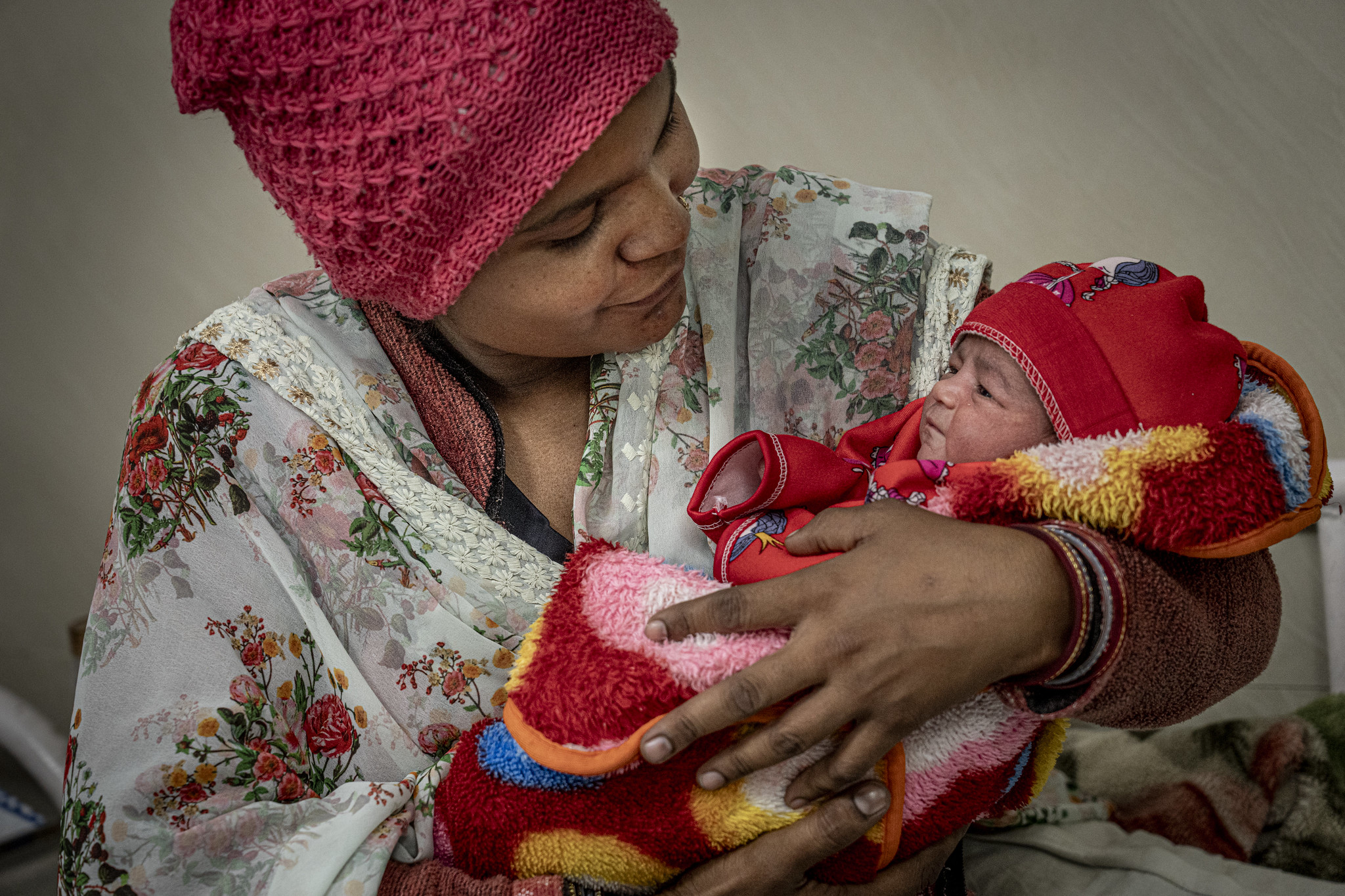

Did you know that postpartum hemorrhage (PPH) is the leading cause of maternal death worldwide? Fourteen million women experience postpartum hemorrhage annually. That’s 70,000 lives lost each year. The risk of PPH and PPH-related morbidity and mortality disproportionately affects women in low- and middle-income countries, especially those who lack access to quality care due to poverty, geography, and cultural barriers.
The Unitaid-funded Accelerating Measurable Progress and Leveraging Investments for Postpartum Hemorrhage Impact (AMPLI-PPHI) (pronounced “amplify”) project works with countries to accelerate short- and long-term action to prevent and treat PPH, focusing on three key areas: generating evidence and project learning, creating an enabling environment, and improving the market for the adoption of key lifesaving tools.
AMPLI-PPHI is a four-year (2022–2026), $26 million initiative with a goal to contribute to reduced maternal mortality from PPH by catalyzing the adoption of effective drugs and tools for PPH prevention, detection, and treatment as part of quality of intrapartum care. Jhpiego is leading AMPLI-PPHI in partnership with PATH and the International Federation of Gynecology and Obstetrics (FIGO), supporting countries to halt the detrimental effect of bleeding after birth. AMPLI-PPHI focuses on three key areas to achieve its goal and in partnership with countries: generating evidence and learning, creating an enabling environment, and improving the market to enable scale-up of four tools: heat-stable carbetocin (HSC) for prevention, calibrated drapes for detection, tranexamic acid (TXA) for treatment as part of a clinical care bundle, and misoprostol for prevention among women giving birth in the communities they live, in low- and middle-income countries. In partnership with governments from the Democratic Republic of Congo, Guinea, India, Kenya, Nigeria, and Zambia, and with complementary funding from the European Union through Safe Birth Africa, a joint Unitaid-UNFPA venture, and the Gates Foundation, AMPLI-PPHI supports countries to ensure that the right PPH tools are available and used at the right time for the right patient across health systems, ultimately reducing maternal morbidity and mortality.